Two Years Down, Eight to Go: Agencies' Progress in Implementing the Hawaii Interagency Biosecurity Plan
Josh Atwood (HISC); Jonathan Ho, Kent Dumlao (HDOA Plant Quarantine); Becky Azama (HDOA Plant Pest Control); Raquel Wong (HDOA Animal Industry); Grace Simmons (DOH Vector Control); Mike Melzer (UH); Jules Kuo (DLNR DAR); Randy Bartlett (HISC)


The Hawaii Interagency Biosecurity Plan (HIBP) was developed by HDOA, the HISC, and a diverse group partners and stakeholders including members of government, industry, and the public. We define biosecurity as the complete set of measures taken to manage the risk from invasive species to the economy, environment, and the health and lifestyle of the people of Hawaii. It is an cross-sectoral problem that requires interagency solutions.
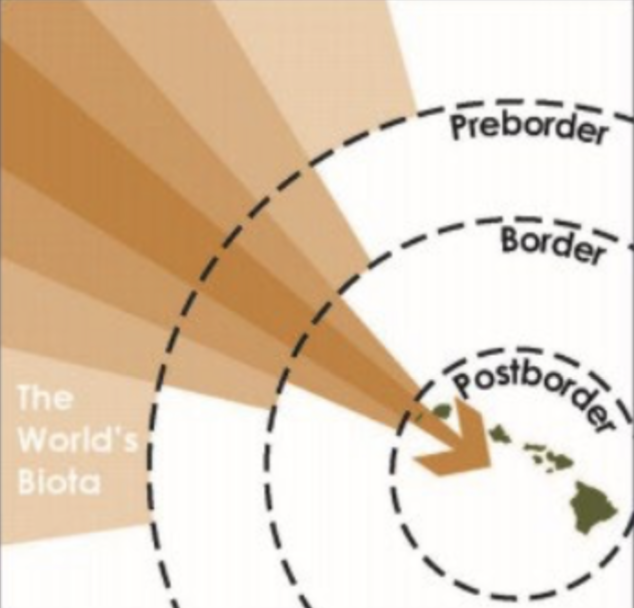
The HIBP started with a gaps analysis and resulted in 147 actions designed to address those gaps. The actions are assigned a lead agency and time frame for implementation between 2017 and 2027. This effort is comprehensive in scope, meaning it includes:
• Preborder biosecurity: policies and actions preventing the entry of invasive species to Hawaii
• Border biosecurity: policies and actions for detection and response to the arrival of species in Hawaii
• Postborder biosecurity: policies and actions for the control or eradication of species present in Hawaii.
The Plan
The Hawaii Interagency Biosecurity Plan (HIBP) was developed by HDOA, the HISC, and a diverse group partners and stakeholders including members of government, industry, and the public. We define biosecurity as the complete set of measures taken to manage the risk from invasive species to the economy, environment, and the health and lifestyle of the people of Hawaii. It is an cross-sectoral problem that requires interagency solutions.
The HIBP started with a gaps analysis and resulted in 147 actions designed to address those gaps. The actions are assigned a lead agency and time frame for implementation between 2017 and 2027. This effort is comprehensive in scope, meaning it includes:
• Preborder biosecurity: policies and actions preventing the entry of invasive species to Hawaii
• Border biosecurity: policies and actions for detection and response to the arrival of species in Hawaii
• Postborder biosecurity: policies and actions for the control or eradication of species present in Hawaii.
(Scroll down for highlights)

24 months into the implementation timeline, 56% of outreach agency actions have been initiated. Neither of the two legislative actions has been introduced yet. Highlights include:
•The rapid ohia death documentary "Saving Ohia" won THREE EMMYS! The film was executive produced by CGAPS with support from interagency partners in the ROD working group.
•HDOA Plant Industry Division has new signs and videos at Honolulu Airport relating to biosecurity, focusing on proper use of amnesty bins on entry to Hawaii (PwsTifs1.4)
•The State launched a new pest reporting tool for public use in 2017. Joining the existing 643-PEST telephone hotline are the new 643pest.org website and 643-PEST mobile app, available on iOS and Android. Now users can alert the state of invasive species sightings from anywhere, and can upload photos and map points to aid response. (PwsPro3.5)
•A 2017 public awareness survey by the Coordinating Group on Alien Pest Species found that over 80% of Hawaii residents consider invasive species a serious problem, and 75% support doubling the portion of the state budget that goes toward biosecurity agencies. (PwsPro3.3)
Remaining outreach needs by 2027 include:
•Promote a certified nurseries program to help consumers find certified growers (PwsPro1.5)
•Expand the “Buy Local” campaign at HDOA to include messaging about biosecurity and the reduced invasive species risk associated with supporting local agriculture.
Awareness Actions
(Scroll down for highlights)
24 months into the implementation timeline, 56% of outreach agency actions have been initiated. Neither of the two legislative actions has been introduced yet. Highlights include:
•The rapid ohia death documentary "Saving Ohia" won THREE EMMYS! The film was executive produced by CGAPS with support from interagency partners in the ROD working group.
•HDOA Plant Industry Division has new signs and videos at Honolulu Airport relating to biosecurity, focusing on proper use of amnesty bins on entry to Hawaii (PwsTifs1.4)
•The State launched a new pest reporting tool for public use in 2017. Joining the existing 643-PEST telephone hotline are the new 643pest.org website and 643-PEST mobile app, available on iOS and Android. Now users can alert the state of invasive species sightings from anywhere, and can upload photos and map points to aid response. (PwsPro3.5)
•A 2017 public awareness survey by the Coordinating Group on Alien Pest Species found that over 80% of Hawaii residents consider invasive species a serious problem, and 75% support doubling the portion of the state budget that goes toward biosecurity agencies. (PwsPro3.3)
Remaining outreach needs by 2027 include:
•Promote a certified nurseries program to help consumers find certified growers (PwsPro1.5)
•Expand the “Buy Local” campaign at HDOA to include messaging about biosecurity and the reduced invasive species risk associated with supporting local agriculture.
(Scroll down for highlights)

24 months into the implementation timeline, 58% of preborder agency actions have been initiated and 33% of legislative actions have been adopted. Highlights include:
•DLNR DAR is using an aquatic invasive species risk assessment to develop a list of species that they will request to prohibit from import (PrePol1.8)
•HDOA Animal Industry Division updated their import policies for poultry following detection of Virulent Newcastle’s Disease (PrePro1.6)
•HDOA Plant Quarantine Branch completed the first phase of development on the electronic manifesting system that will improve how inspectors target high-risk shipments (PrePro1.1)
• 4 positions approved by the legislature in 2019 for Plant Quarantine, including an entomologist, botanist, pathologist, and data specialist for imports.
Remaining preborder needs by 2027 include:
• Amending admin rules to require phytosanitary certificates for high-risk plant imports (PrePol2.2)
• At DLNR Division of Aquatic Resources, hiring two biologists to conduct ballast & biofouling risk assessments (PreTifs2.5)
Preborder Actions
(Scroll down for highlights)
24 months into the implementation timeline, 58% of preborder agency actions have been initiated and 33% of legislative actions have been adopted. Highlights include:
•DLNR DAR is using an aquatic invasive species risk assessment to develop a list of species that they will request to prohibit from import (PrePol1.8)
•HDOA Animal Industry Division updated their import policies for poultry following detection of Virulent Newcastle’s Disease (PrePro1.6)
•HDOA Plant Quarantine Branch completed the first phase of development on the electronic manifesting system that will improve how inspectors target high-risk shipments (PrePro1.1)
• 4 positions approved by the legislature in 2019 for Plant Quarantine, including an entomologist, botanist, pathologist, and data specialist for imports.
Remaining preborder needs by 2027 include:
• Amending admin rules to require phytosanitary certificates for high-risk plant imports (PrePol2.2)
• At DLNR Division of Aquatic Resources, hiring two biologists to conduct ballast & biofouling risk assessments (PreTifs2.5)
(Scroll down for highlights)

24 months into the implementation timeline, 76% of border agency actions have been initiated and 13% of legislative actions have been adopted. Highlights include:
• In partnership with the Coordinating Group on Alien Pest Species, HDOA is developing draft rules for a Restricted Plant List that would prohibit the introduction of some potential invasive plants. (BorPol2.2)
•DLNR Division of Aquatic Resources joined an international research effort to identify safe tools to clean vessel hulls of biofouling species (BorPro2.4)
•The Rapid OhiaDeath Working Group is in the process of developing early detection and rapid response plans for the detection of Rapid OhiaDeath on islands where it is not currently known to occur. (BorPro3.4)
•New traps have been placed at airports for high-risk species including brown treesnake, mosquitoes, coconut rhino beetle, ants, and Africanized honeybees. (BorTifs2.2)
Remaining border needs by 2027 include:
•Double the staff at HDOA Plant Quarantine Branch to meet current inspection volume, roughly 90 new positions (BorTifs1.1)
•Hire 10 aquatic biologists to inspect and regulate ballast water and biofouling statewide to assist with Vessel Incidental Discharge Act implementation (BorTifs3.1)
•Establish a biosecurity emergency response fund. Bills introduced in 2017, 2018, and 2019 but not yet approved. (BorPol1.3)
•Add an additional four detector dogs and handlers at HDOA (BorTifs1.3)
Border Actions
(Scroll down for highlights)
24 months into the implementation timeline, 76% of border agency actions have been initiated and 13% of legislative actions have been adopted. Highlights include:
• In partnership with the Coordinating Group on Alien Pest Species, HDOA is developing draft rules for a Restricted Plant List that would prohibit the introduction of some potential invasive plants. (BorPol2.2)
•DLNR Division of Aquatic Resources joined an international research effort to identify safe tools to clean vessel hulls of biofouling species (BorPro2.4)
•The Rapid OhiaDeath Working Group is in the process of developing early detection and rapid response plans for the detection of Rapid OhiaDeath on islands where it is not currently known to occur. (BorPro3.4)
•New traps have been placed at airports for high-risk species including brown treesnake, mosquitoes, coconut rhino beetle, ants, and Africanized honeybees. (BorTifs2.2)
Remaining border needs by 2027 include:
•Double the staff at HDOA Plant Quarantine Branch to meet current inspection volume, roughly 90 new positions (BorTifs1.1)
•Hire 10 aquatic biologists to inspect and regulate ballast water and biofouling statewide to assist with Vessel Incidental Discharge Act implementation (BorTifs3.1)
•Establish a biosecurity emergency response fund. Bills introduced in 2017, 2018, and 2019 but not yet approved. (BorPol1.3)
•Add an additional four detector dogs and handlers at HDOA (BorTifs1.3)
.png)
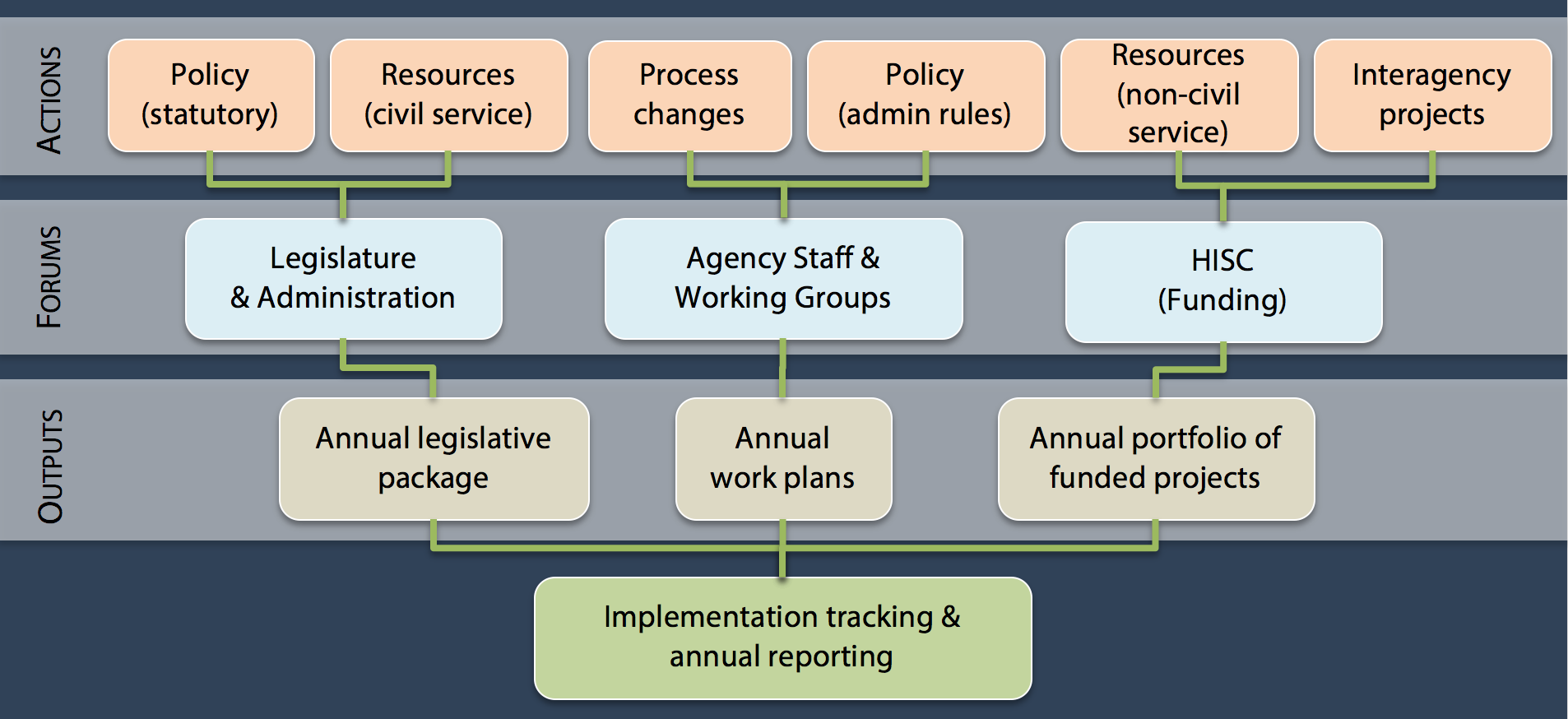
HIBP actions are categorized as one of three types: 1) Policy actions, including legislation and admin rules; 2) Process actions, describing how existing resources work together; and 3) Resource actions, including developments in technology, infrastructure, funding, and staffing. The implementation path depends on the type of action:
Focal areas of the Plan:

Implementation Strategy
HIBP actions are categorized as one of three types: 1) Policy actions, including legislation and admin rules; 2) Process actions, describing how existing resources work together; and 3) Resource actions, including developments in technology, infrastructure, funding, and staffing. The implementation path depends on the type of action:
Focal areas of the Plan:
(Scroll down for highlights)

24 months into the implementation timeline, 50% of postborder agency actions have been initiated and 10% of legislative actions have been adopted. Highlights include:
•The legislature provided funding for a number of important postborder biosecurity issues in 2018 and 2019, including: planning funds to develop a new HDOA Biocontrol Research Facility ($180k in 2018), a large boost to watershed fencing funding, funds for predator and coqui fences, and increased funding for the HISC, now part of the recurring base budget.
•Governor Ige announced at the 2018 Western Governors’ Association meeting in Waikoloa that the State and partners would be looking to expand the concept for a new biocontrol facility to include federal input in creating a Pacific Regional Biocontrol Center
•The legislature approved 10 positions for the College of Tropical Agriculture and Human Resources, several of which will focus on issues relating to invasive species (PosTifs1.12)
Remaining postborder needs by 2027 include:
• At HDOA Plant Pest Control Branch, hire 20 positions to meet current control needs (PosTifs1.2)
• Increase stability for PCSU, the Hawaii Ant Lab, and the Invasive Species Committees (PosPro1.5)
• Construct new biocontrol research facilities for State and Federal partnerships (PosTifs2.1)
• At UH CTAHR, hire four agricultural diagnosticians for insect & disease response (PosTifs1.14)
• At DLNR DOFAW, hire 45 invasive species techs statewide to protect natural areas. Requested in 2018 but not yet approved. (PosTifs1.10)
Postborder Actions
(Scroll down for highlights)
24 months into the implementation timeline, 50% of postborder agency actions have been initiated and 10% of legislative actions have been adopted. Highlights include:
•The legislature provided funding for a number of important postborder biosecurity issues in 2018 and 2019, including: planning funds to develop a new HDOA Biocontrol Research Facility ($180k in 2018), a large boost to watershed fencing funding, funds for predator and coqui fences, and increased funding for the HISC, now part of the recurring base budget.
•Governor Ige announced at the 2018 Western Governors’ Association meeting in Waikoloa that the State and partners would be looking to expand the concept for a new biocontrol facility to include federal input in creating a Pacific Regional Biocontrol Center
•The legislature approved 10 positions for the College of Tropical Agriculture and Human Resources, several of which will focus on issues relating to invasive species (PosTifs1.12)
Remaining postborder needs by 2027 include:
• At HDOA Plant Pest Control Branch, hire 20 positions to meet current control needs (PosTifs1.2)
• Increase stability for PCSU, the Hawaii Ant Lab, and the Invasive Species Committees (PosPro1.5)
• Construct new biocontrol research facilities for State and Federal partnerships (PosTifs2.1)
• At UH CTAHR, hire four agricultural diagnosticians for insect & disease response (PosTifs1.14)
• At DLNR DOFAW, hire 45 invasive species techs statewide to protect natural areas. Requested in 2018 but not yet approved. (PosTifs1.10)
.png)